 dr. Kaja Bałazy
The main subject of my research is Arctic zooplankton, primarily copepods of the genus Calanus. Due to their high fat content, they are the primary food source for higher trophic levels, such as fish, birds, and marine mammals.I place my research on zooplankton in the broader context of the ecology of their main predators, especially plankton-eating seabirds – auks, which, thanks to their abundance and role in fertilizing the Arctic tundra, are called the ecological engineers of the Arctic.
II began my research on the ecology of Arctic zooplankton in 2015 at the Institute of Oceanology of the Polish Academy of Sciences, where I still work today. I have experience in submitting grant applications – I am currently leading two Opus NCN projects. I also completed a six-month internship at the University of Tromsø, and I am establishing new scientific collaborations to pursue further research ideas. I am an open and trustworthy person who values honesty as the basis for building good relationships within a group. I listen more than I speak, which allows me to better understand the needs of others and effectively support them in achieving their goals.
I offer my support in navigating the demanding process of doctoral studies, based on my own experience gained during ten years of academic experience. In particular, I can help in areas such as developing soft skills, work organization, project management, establishing academic contacts, self-presentation, and preparing research funding applications.
 dr. Guillermo de Mendoza Barbera
I am an aquatic ecologist focusing on benthic invertebrate communities, with a strong freshwater background, and now learning about marine systems. I am biologist by education and obtained my MSc and PhD in Ecology at the University of Barcelona (Spain), thereafter completing a number of postdocs at the CNRS in Toulouse (France), University of California, Berkeley (USA), and University of Gdańsk (Poland). I am now working at IO PAN in the National Oceanographic Data Center.
I focus my research activity on the numerical analysis of ecological communities, in both freshwater and marine environments, through space and time, in order to comprehend fundamental and applied aspects of biodiversity change. I am proficient in the usage of R programming, and skilled in statistics of virtually any kind. I am also experienced in the taxonomy of aquatic insects, particularly Chironomidae and Trichoptera.
I do have strong interpersonal skills, I have a lot of empathy for students, and I am a good listener. I am also excellent in preparing and delivering public presentations, and I would be more than happy to help students with that. I can also be helpful with statistical analysis.
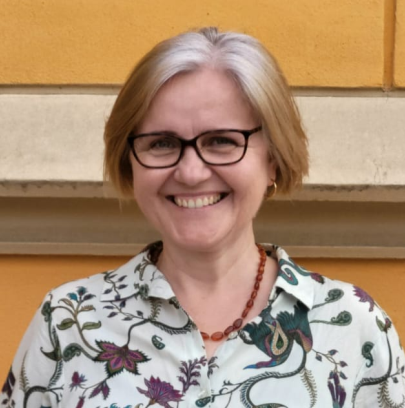 Assoc. Prof. Violetta Drozdowska
My professional experience includes organizing and participating in research cruises and shore-based experiments. I actively share my scientific achievements and research interests at conferences, internships, and various scientific meetings.
I consider my strengths to be teamwork and seeking opportunities for collaboration, which gives me the chance to learn about new procedures/research and measurement methods, as well as building and strengthening my network of contacts, which broadens my scientific horizons. I believe that by getting involved in scientific projects and then communicating them to the public, we feel that we can have an impact on building a better world.
I am eager to use my strengths in my work with Mentees. In the mentoring process, I am also happy to address topics related to building bridges between people with different professional experiences, the quality of cooperation in the work environment, and strengthening awareness of the role of women in science.
 dr. Klaudia Kosek
I specialize in analytical chemistry, marine chemistry, and environmental sciences. My experience includes conducting research projects, managing interdisciplinary collaboration, and performing laboratory work focused on chemical analysis and environmental research. My main scientific interests focus on the chemical aspects of polar environments, with a particular emphasis on marine pollution in polar regions. My work aims to improve our understanding of chemical and biological interactions in marine systems, especially in sensitive polar regions, and to raise awareness of the environmental challenges in these areas.
I am able to collaborate effectively with researchers from various fields. I approach challenges methodically, breaking them down into smaller steps and developing practical solutions. I navigate dynamic research environments skillfully, adjusting strategies and priorities to achieve desired outcomes.
The areas of mentoring in which I have the most experience, and where I feel I can offer the most support to my mentees, include work organization – offering guidance on planning and managing research projects, strategies for obtaining research funding, improving the ability to present research clearly and effectively in publications and presentations, and enhancing communication and teamwork skills.
 dr. Alexandra Loginowa
I have participated in numerous research cruises and in the design and implementation of incubation experiments. I have also prepared research proposals, reports, and databases. I am also involved in the preparation of scientific manuscripts, basic statistical analyses (PARAFAC, PCA, pipeline dada2), and I participate in science outreach events, conferences, workshops, etc. My research focuses on the cycle of dissolved organic matter, its optical properties, and chemical composition.
I consider my strengths at work to be planning and management (of projects/experiments), teamwork and problem solving (overcoming technical/logistical challenges), communication with scientific and non-scientific audiences, flexibility, perseverance, and a proactive approach (research design, proposal preparation, outreach activities).
My soft skills include project management, self-presentation/public speaking, and establishing scientific contacts. I am happy to provide support in these areas, as well as in finding sources of funding for research or scientific development.
 dr. Iwona Niedźwiecka
I completed my doctoral studies in Interdisciplinary Polar Studies at the Center for Polar Studies (POLARKNOW), Institute of Oceanology, Polish Academy of Sciences. The title of my doctoral thesis, supervised by Prof. Jacek Piskozub, was “Analysis of mass, momentum, and gas exchange fluxes relevant to climate change across the sea surface in the European Arctic,” and since then I have been studying the interaction between the sea and the atmosphere. I specialize in the processes and factors influencing the magnitude, seasonality, and efficiency of CO2 exchange between the ocean and the atmosphere, various methods of measuring fluxes, and future climate change scenarios in relation to changes in the elements on which exchange fluxes depend. My research involves the precise measurement of physical characteristics used to determine climate and climatic factors, the analysis of local climate, and the reduction of measurement error and uncertainty associated with the use of direct methods in micro-regional flux measurements.
I consider my strengths to be persistence in pursuing my goals, accuracy, courage in asking questions and seeking help, and the ability to look at a given problem or topic from different perspectives. In my work, I am open-minded and never dismiss any idea, even if it seems absurd at first.
The areas of mentoring in which I am happy to support mentees include developing soft skills, improving work organization, self-presentation/public speaking, and finding sources for research or scientific development funding.
 dr. Paulina Pakszys
In my work, I combine scientific activity with the popularization of knowledge, playing an active role as a communication and promotion manager. I manage the websites of the Institute of Oceanology of the Polish Academy of Sciences and run numerous projects in social media, promoting scientific events and engaging both the academic community and the general public.
My research to date has focused on analyzing the properties of aerosols in the European Arctic, and I have subsequently concentrated on education and the popularization of knowledge about this region and climate change. I have extensive experience in scientific research (cruises, grants, data analysis) and project organization and coordination. I have participated in numerous international research initiatives, including those involving aspects of the social sciences and the arts.
Skillful planning, selection of appropriate means of communication, and effective coordination of events are of key importance to me. In the mentoring process, I will help find optimal solutions in the areas of time management, communication, promotion, and organization of scientific events. Creativity and flexibility can be the key to success. I am also happy to support Mentees in the area of difficulties with preparing publications or grant applications.
 dr. Artur Palacz
I am an oceanographer by education, who has been constantly expanding his interests and experience in the fields of marine chemistry, biology, and physics for many years. My strength lies in my ability to take a holistic view of scientific problems and focus on integrating multiple sources of knowledge and a wide range of tools for observing and modeling changes in marine ecosystems. Working as an oceanographer in Germany, the USA, Denmark, Japan, Australia, and for the last 9 years in Poland, I have gained experience in teamwork in very different environments, building a rich network of contacts, which young scientists at the Institute of Oceanology of the Polish Academy of Sciences also benefit from.
I have been fortunate to meet wonderful mentors in my life who have shown me how to develop scientific and personal potential both in myself and among my colleagues. I am happy to share my experience in managing scientific projects and coordinating scientific research (working for the Global Ocean Observing System in 2016-2024), as well as in effectively communicating and promoting scientific work to various stakeholder groups. As a recipient of several multi-million dollar grants, I offer advice on the process of obtaining research funding.
 dr. Anna Pouch
I have been associated with the Institute of Oceanology of the Polish Academy of Sciences for 10 years. My research focuses on the analysis of organic pollutants in abiotic and biotic samples collected from the Baltic Sea and the Arctic. The aim of this research is to determine the impact of human activity and climate change on the presence of these pollutants. In addition, I study the processes of bioaccumulation and biomagnification of pollutants in the marine food chain.
My strengths include openness, listening skills, attention to detail, and looking at problems from different perspectives. I can help improve work organization, prioritize tasks, create clear presentations, and prepare grant applications, such as PRELUDIUM.
 dr. Marta Szczepanek
I am a researcher with experience in marine ecology, particularly in the diversity and functioning of benthic communities. In my work, I combine a passion for understanding the processes occurring in marine ecosystems with a practical approach to data analysis and interpretation. I am fascinated by issues related to marine biodiversity and interactions between organisms and the environment.
As a mentor, I am happy to support the development of skills related to effective planning and organization of scientific work. I also share practical tips on data analysis, preparing scientific presentations, and writing effectively for publication. I will strive to create a friendly atmosphere of cooperation in which we can work together to find solutions to scientific and professional challenges.
 dr. Natalia Szymańska
I specialize in using marine sediments to reconstruct past and present environmental conditions. To this end, I use both geochemical analyses of sediments and studies of preserved fossil assemblages of marine organisms, primarily foraminifera. I am also interested in the carbon cycle and the role that calcifying organisms play in this process. My main area of research is the Atlantic Ocean, from the Nordic Seas, through the mangrove shores of the Everglades, to the deep-water equatorial region.
My strengths include: fluency in writing scientific and popular science texts, creativity in planning research and posing research questions, experience and passion in communicating research topics, knowledge of obtaining Polish and foreign grants, experience in working in an international research organization, organizing scientific events, and research collaboration with the US.
Areas of mentoring in which I can help the most: effective scientific networking, experience in writing research grant applications, assistance in finding research funding opportunities, support in self-presentation and in communicating knowledge to various audiences.
 Assoc. Prof. Beata Szymczycha
I am a chemist by education and I obtained my PhD in biogeochemistry at the Institute of Oceanology of the Polish Academy of Sciences (IOPAN). I completed a postdoctoral fellowship in the USA and gained experience in obtaining and implementing several national and international grants. I am the author and co-author of dozens of scientific papers.
I focus on studying the interactions between groundwater and marine ecosystems in various environments, from Arctic fjords to the Baltic Sea. My research combines geochemical and isotopic methods to analyze the cycling of biogenic compounds and carbon. I am particularly interested in the ecological and biogeochemical effects of submarine groundwater discharge (SGD) and the carbon, nitrogen, and phosphorus cycles in the marine environment.
My expertise includes assisting in the preparation of scientific essays and articles, as well as posters and presentations for conferences, writing and managing grants, and establishing scientific contacts.


