We are pleased to announce the publication of the fourth and final newsletter of the Detect2Protect project, in which the Institute of Oceanology of the Polish Academy of Sciences is a partner. The project focuses on investigating the links between chemical pollution and biodiversity in the Baltic Sea and on developing integrated chemical-biological approaches to marine environmental monitoring.
The project’s key message: to detect the negative effects of chemical pollution at an early stage, marine environmental monitoring should not be limited to measuring chemical concentrations alone. Chemical analyses need to be combined with assessments of biological effects, biodiversity studies, including eDNA, and integrated analyses that enable ecological interpretation of the data.
The latest newsletter includes, among other things, a summary of the project’s key results, a report from the online stakeholder seminar held on 20 May 2026, short interviews with selected stakeholders from the project’s partner countries on the prospects for effective monitoring of chemical pollution in the Baltic Sea region, and a report from the project’s final meeting in Helsinki (Finnish Environment Institute, Syke, 21–22 May 2026), where the results achieved and opportunities for future collaboration were discussed.
We encourage you to read the newsletter and share it with others who may be interested!
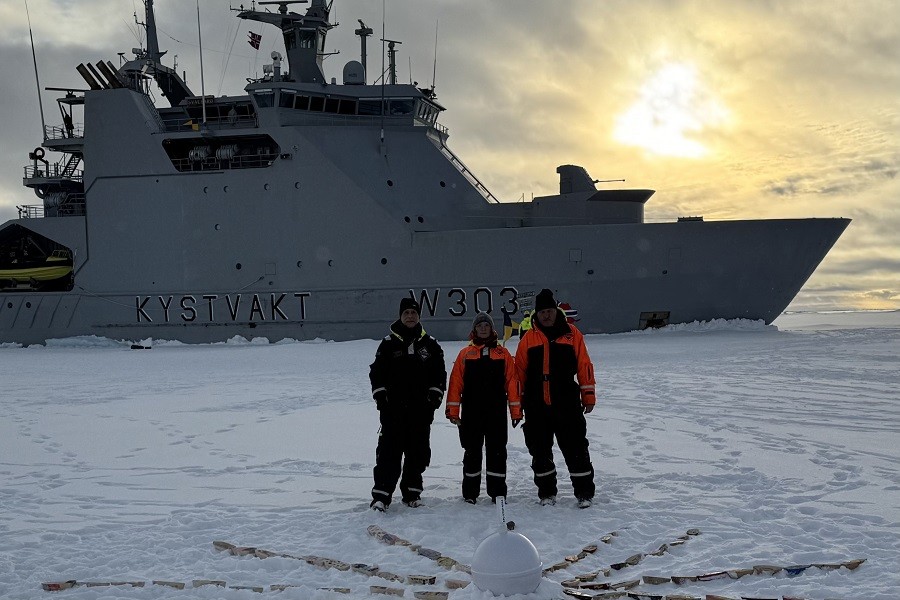
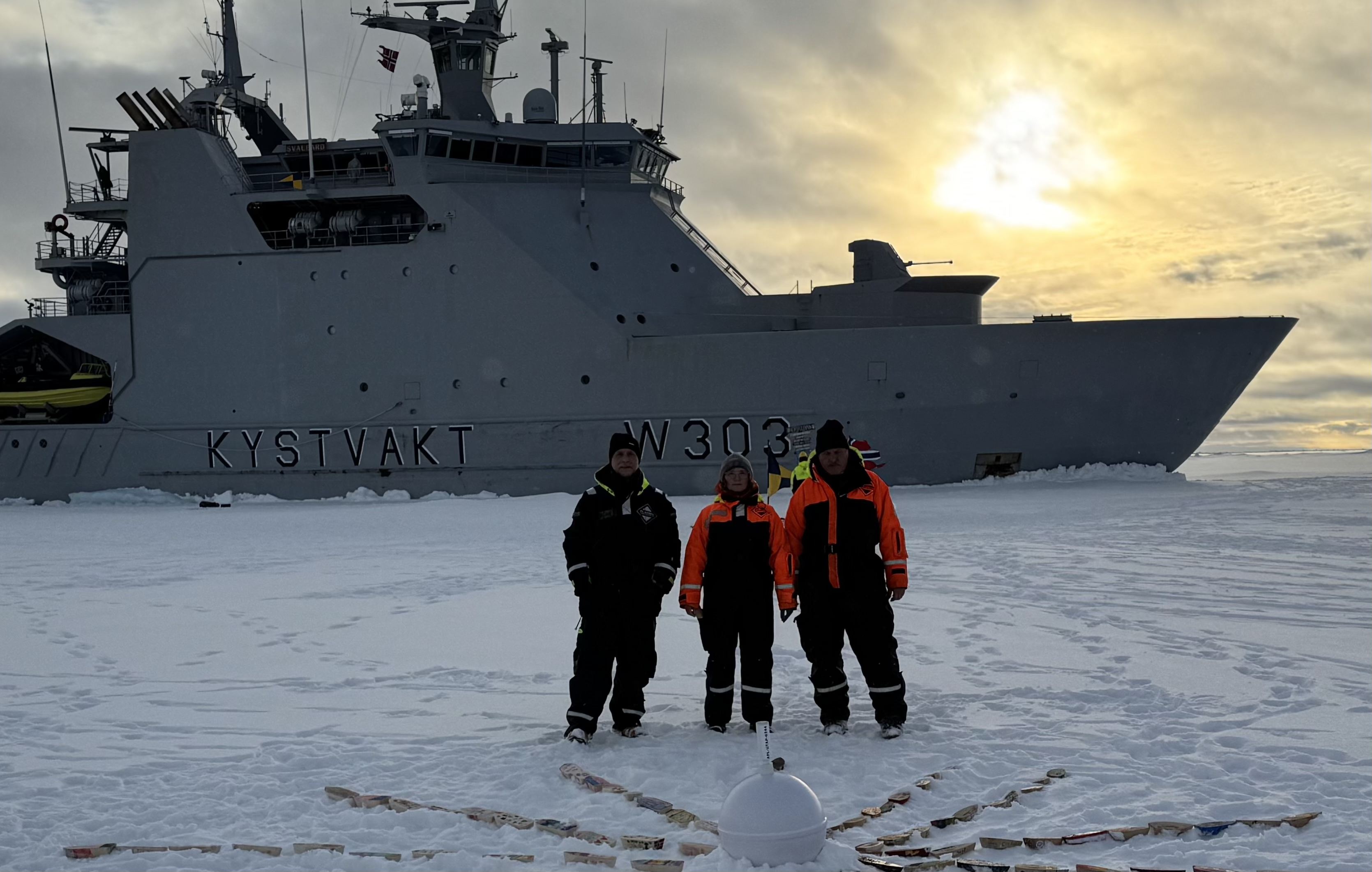
On 29 July 2026, three physical oceanographers from the Institute of Oceanology Polish Academy of Sciences (IO PAN) reached the North Pole. Agnieszka Beszczyńska-Möller, Piotr Wieczorek and Waldemar Walczowski are conducting oceanographic research aboard the Norwegian Coast Guard icebreaker NoCGV Svalbard. The research is being carried out as part of the EU-funded High Arctic Ocean Observation System (HiAOOS) project with contribution from the Argo-Poland program, funded by the Polish Ministry of Science and Higher Education.
The stay at the North Pole lasted 10 hours. During this time, measurements of the ocean properties and structure were carried out from the ship using a CTD profiler, while microstructure measurements in the upper 200 m of the water column were conducted from the edge of the ice floe.
During the research expedition HiAOOS2026 three deep ocean multidisciplinary moorings were recovered. Measurements were also carried out using a CTD profiling system, expendable XCTD probes and microstructure profiler in the upper layer of the Arctic Ocean. Sixty nautical miles from the North Pole, the Argo float operated by the Argo-Polska program was deployed.
As part of the consortium's participation in the Euro-Argo European Research Infrastructure Consortium (Euro-Argo ERIC), the Polish oceanographers also deployed two Argo floats belonging to the German Federal Maritime and Hydrographic Agency (BSH). Further mooring recoveries, including one mooring operated by IO PAN and floats deployments are planned.
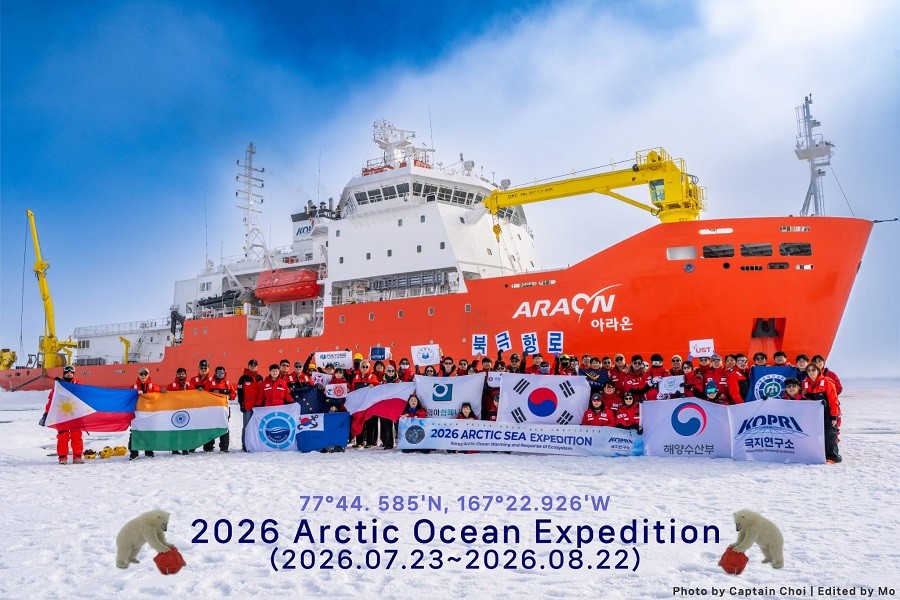
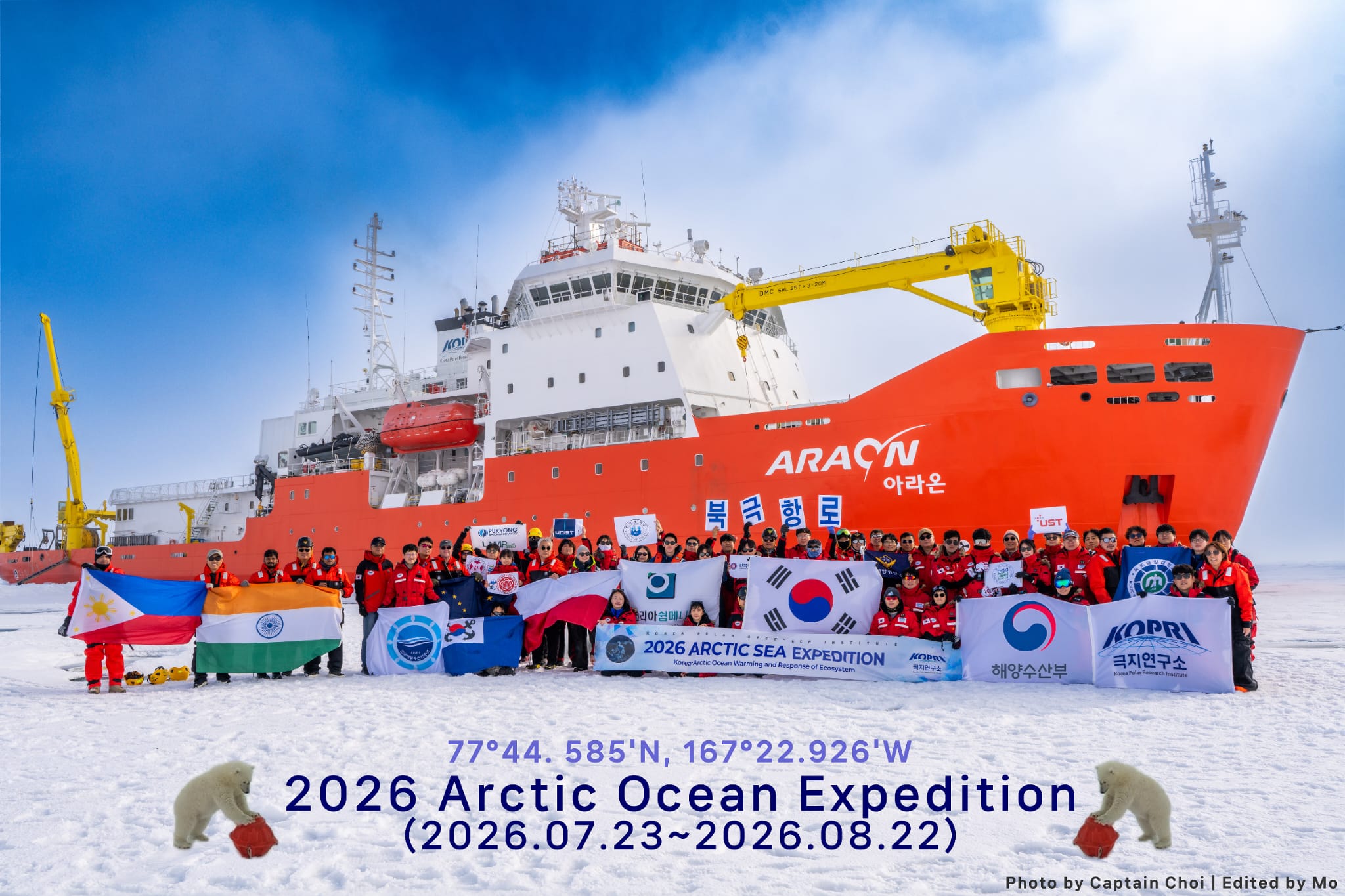
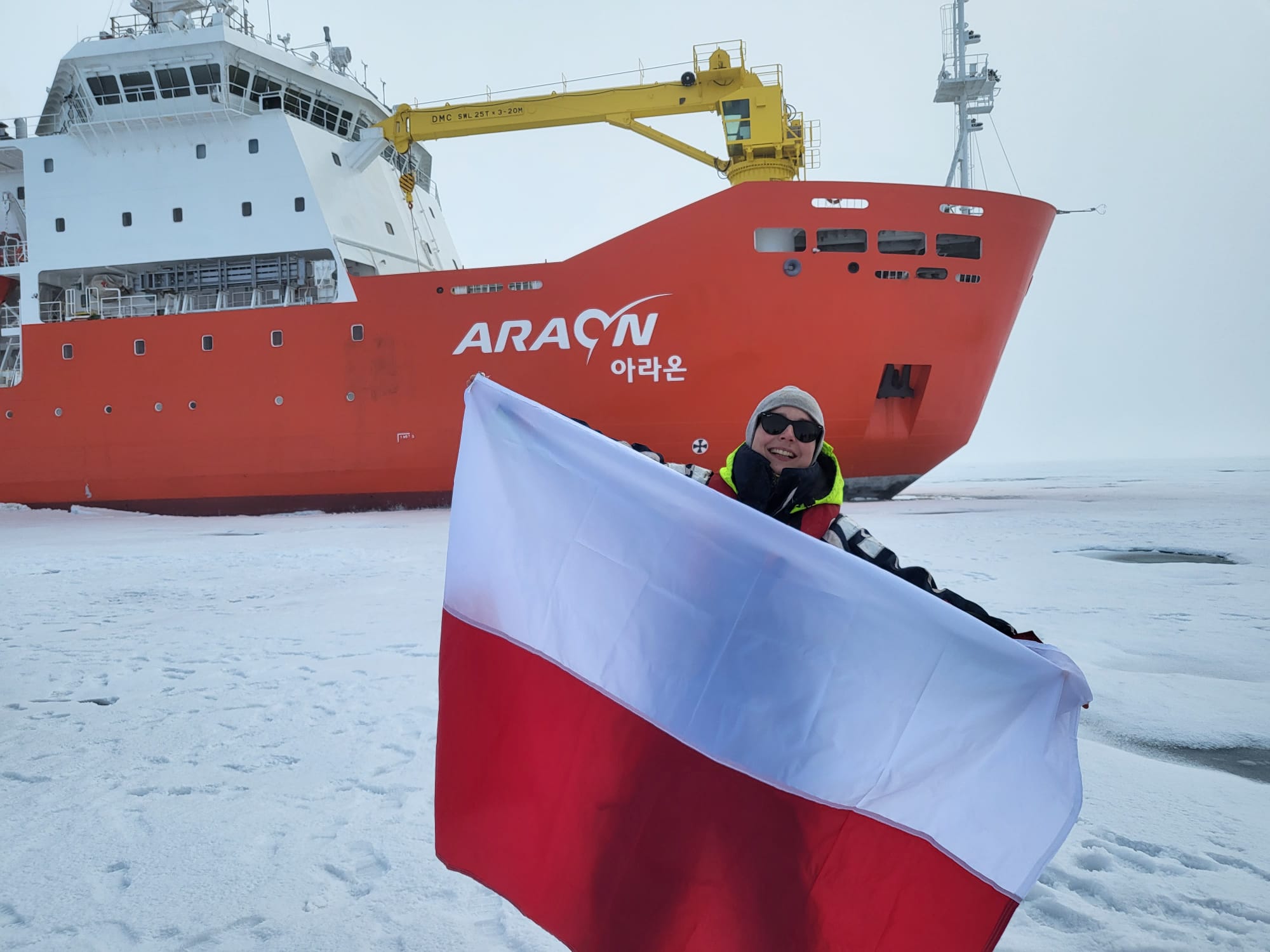
Assoc. Prof. Katarzyna Grzelak is currently participating in the 2026 Arctic Ocean Expedition aboard the Korean research vessel RV Araon.
Assoc. Prof. Grzelak is studing benthic communities in the Pacific sector of the Arctic Ocean as a part of the scientific cooperation between the Institute of Oceanology of the Polish Academy of Sciences (IO PAN) and the Korea Polar Research Institute (KOPRI).
We are pleased to announce that the Institute of Oceanology of the Polish Academy of Sciences has been honoured with the European Intelligent Development Award 2026 during the 11th edition of the European Smart Growth Award 2026. The award recognises the Institute's achievements in developing and implementing innovative numerical models and digital decision-support systems for environmental protection, maritime management, and sustainable agriculture. It also acknowledges the successful integration of scientific research with practical applications, resulting in tools that support responsible natural resource management, enhance safety, and strengthen Europe's resilience to environmental and climate-related challenges.
The award reflects the achievements of the Marine Ecohydrodynamic Laboratory, headed by Prof. Lidia Dzierzbicka-Głowacka. For many years, the Laboratory has been developing advanced numerical models and decision-support tools that are applied in marine and aquatic environmental protection, sustainable natural resource management, and climate change adaptation.
The official award ceremony will take place on 3 September 2026 at 17:00 during the Gala of the 11th European Smart Growth Award 2026, held as part of the 11th European Smart Growth Forum, taking place in Gdańsk, Poland, on 3–4 September 2026.
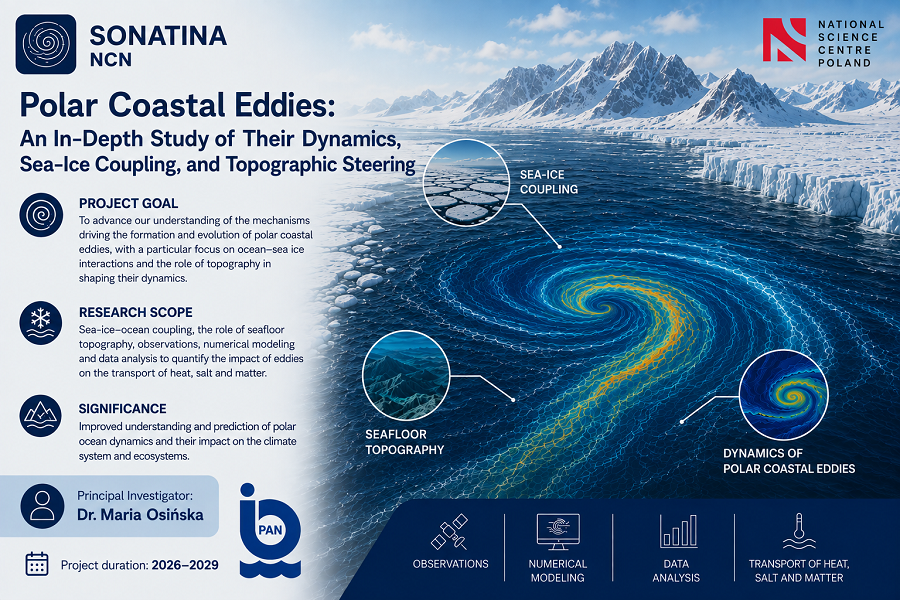
We are pleased to announce that the project 'Polar Coastal Eddies: An In-Depth Study of Their Dynamics, Sea-Ice Coupling, and Topographic Steering' has been awarded funding under the SONATINA programme of the National Science Centre (NCN).
The project is led by Dr. Maria Osińska. The research will focus on the processes governing the formation and evolution of coastal eddies in polar regions, with particular emphasis on interactions between the ocean and sea ice, as well as the influence of seabed topography on eddy dynamics.
Congratulations to Dr. Maria Osińska on this achievement, and we wish her every success in the implementation of the project!
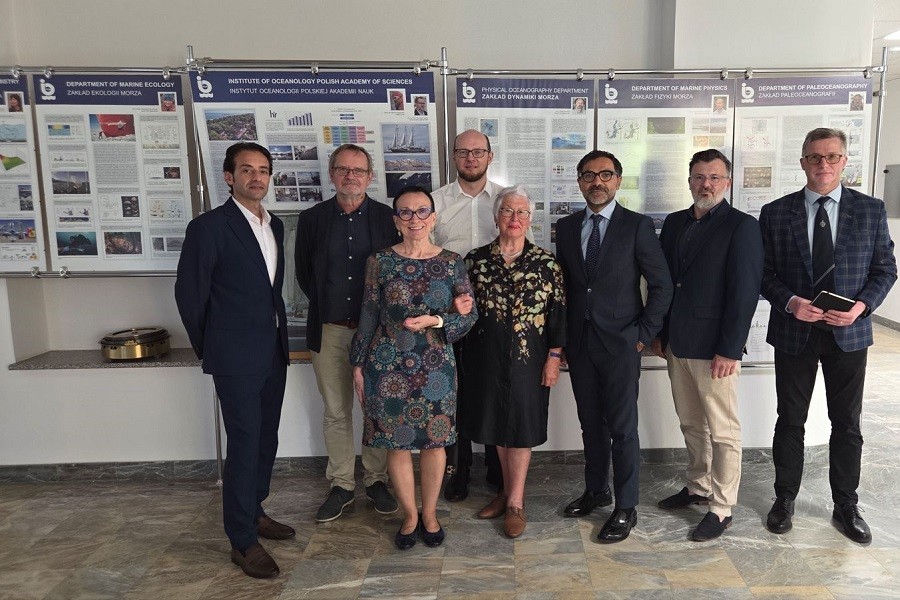
On 9 July 2026, the Institute of Oceanology of the Polish Academy of Sciences welcomed Ms. Winsome Dormer, Honorary Consul of the Republic of Poland in New Zealand (Honorary Consulate of the Republic of Poland in Christchurch), along with representatives of the Italian company ARGO s.r.l.: Chief Executive Officer Mario Attanasio and Head of Technical Department Luigi Scotto d'Antuono.
During the meeting, the guests were presented with the concept of the new research vessel Oceania II. The discussions also focused on opportunities for future scientific and technological cooperation, including the potential application of innovative solutions supporting oceanographic research and the development of international partnerships.
The visit provided an opportunity to exchange expertise and discuss directions for further cooperation between the Institute of Oceanology of the Polish Academy of Sciences and its international partners.