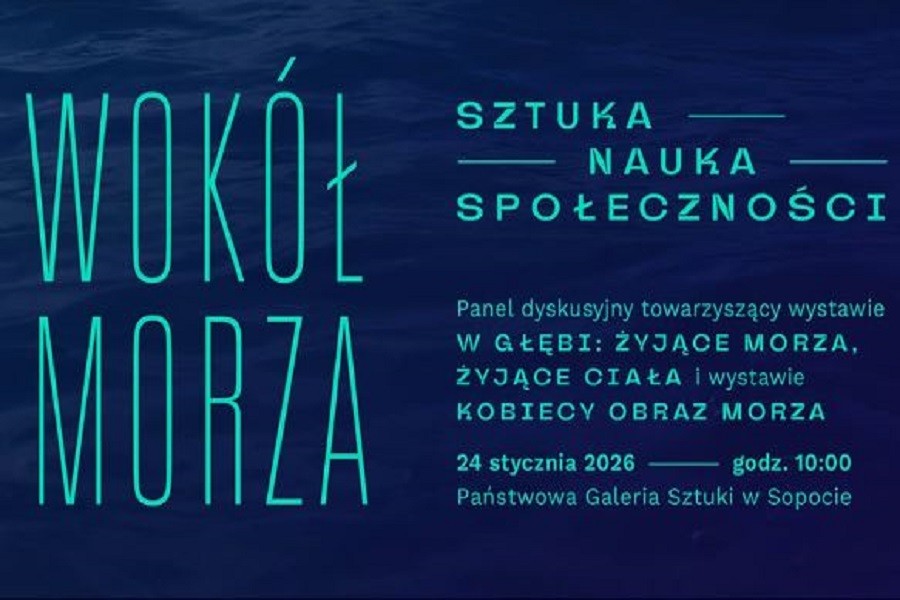
We warmly invite you to the panel discussion entitled “Around the Sea: Art – Science – Communities”, which will take place on 24 January 2026 at 10:00 a.m. at the State Art Gallery in Sopot.
The panel discussion accompanies the exhibition “In the Depths: Living Seas, Living Bodies” as well as the exhibition “The Feminine Image of the Sea”.
Partners: Institute of Oceanology, Polish Academy of Sciences; University of Gdańsk; Sea Fisheries Institute – National Research Institute.
The aim of the meeting is to present the activities of artists and scientists, cultural institutions, and local communities within the Ocean Decade – a program proclaimed by the United Nations and UNESCO five years ago, devoted, among others, to ecological, scientific, and artistic activities.
We are pleased to announce that the third issue of the Detect2Protect project newsletter has been released. In this edition you will find, among others:
We encourage you to read the newsletter and share it with others who may be interested!
We are pleased to announce that the third issue of the MARBEFES project newsletter has been published. In this edition you will find, among others:
We encourage you to read the newsletter and follow how the MARBEFES project links marine biodiversity with its ecological, social, and economic value.
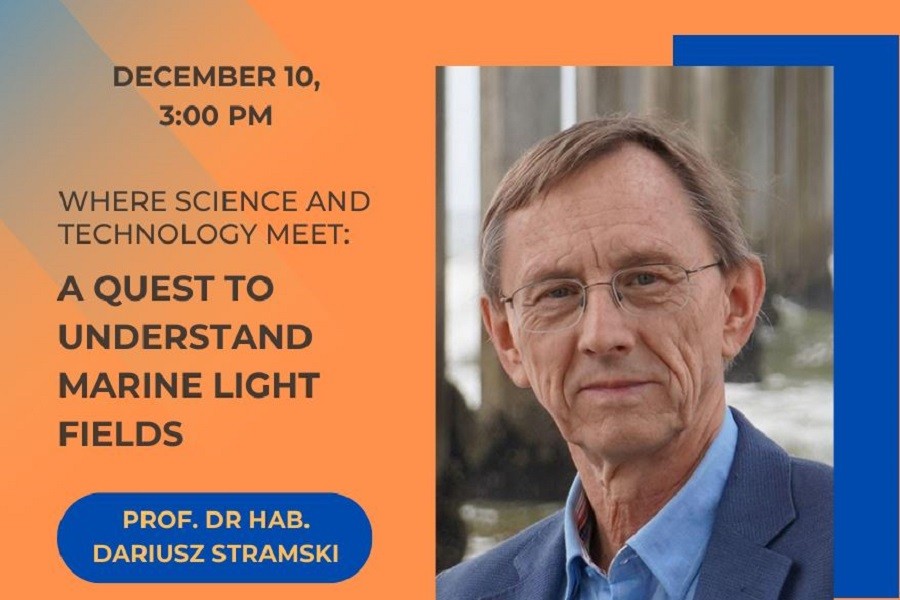
We warmly invite you to a lecture by Prof. Dariusz Stramski, an outstanding oceanographer and a leading expert in marine optics. The event will take place online on 10 December 2025 at 15:00.
In his talk titled 'Where science and technology meet: A quest to understand marine light fields', Professor Stramski will take us on a fascinating journey into the world of light hidden beneath the ocean surface. The lecture will last approximately one hour and will be delivered in English. A short discussion will follow the presentation.
Link to the meeting: LECTURE BY PROF. DARIUSZ STRAMSKI
On 5 December 2025, the XXII Young Oceanographers’ Symposium was held at the Faculty of Oceanography and Geography of the University of Gdańsk, during which young researchers presented a total of 13 oral presentations and 8 posters. The competition committee awarded four works, three of which were received by PhD students from IO PAN:
Professor Krzysztof Skóra Award: Weronika Patuła, MSc 'From plankton nets to metabarcoding: exploring the diversity and environmental barriers of Arctic meroplankton in space and time'
Professor Halina Piekarek-Jankowska Award: Dominik Lis, MSc 'Remote estimation of near-surface concentrations and vertical profiles of chlorophyll a in the Baltic Sea using machine learning methods'
Best Poster Award: Blanka Pajda, MSc
Congratulations!
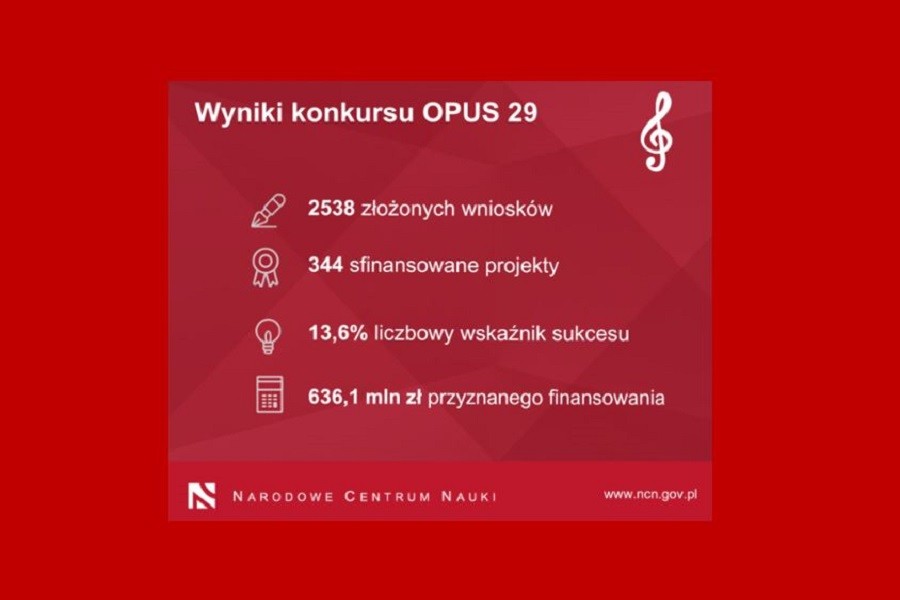
We are pleased to announce that in the NCN OPUS 29 call, our researchers have secured four new research grants. Funding was awarded to:
We warmly congratulate the Project Leaders and wish them every success in carrying out their research.