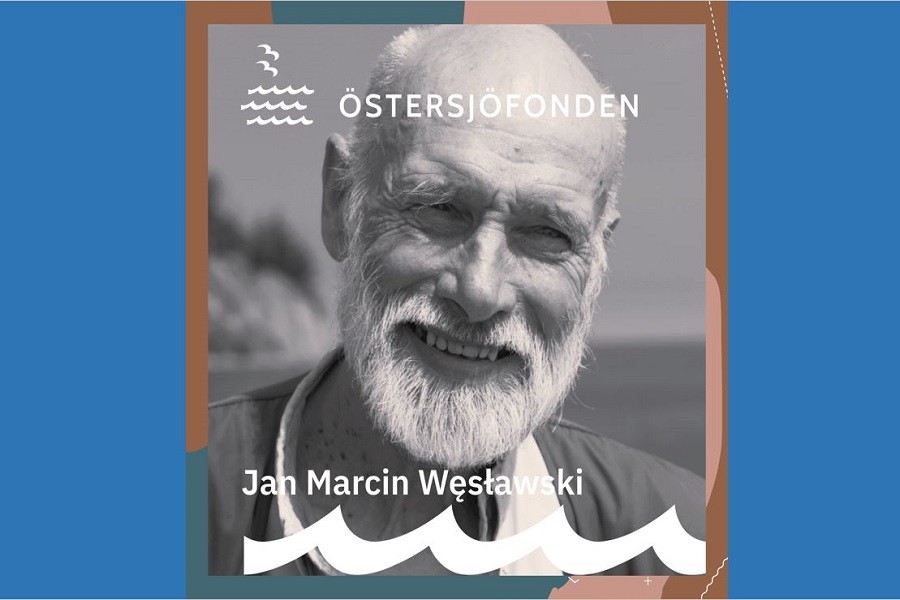
We are pleased to announce that Prof. Jan Marcin Węsławski (Institute of Oceanology of the Polish Academy of Sciences) has received the Baltic Sea Award, a prestigious prize awarded by Östersjöfonden (The Baltic Sea Foundation) in recognition of significant contributions to research and the protection of the Baltic Sea environment.
Prof. Węsławski is the fourth person from Poland to receive this award. Previous Polish recipients include Anna Trzosińska (1991), Krzysztof E. Skóra (2005), and Maria Staniszewska (2005), who was affiliated with the Polish Ecological Club.
Congratulations!
Prize winners and more information about the Baltic Sea Award
Photos
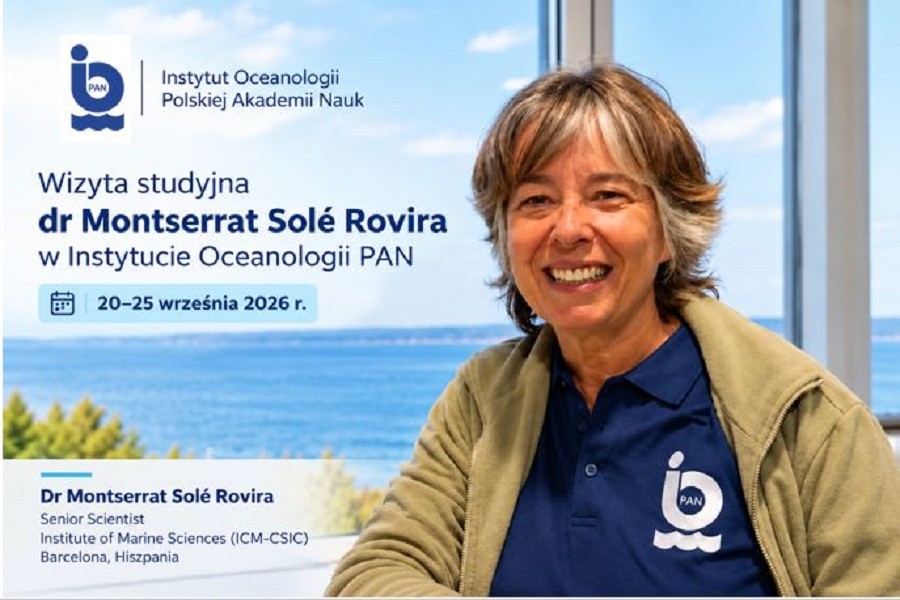
From 20 to 25 September 2026, the Institute of Oceanology of the Polish Academy of Sciences hosted Dr. Montserrat Solé Rovira, Senior Scientist at the Institute of Marine Sciences (ICM-CSIC) in Barcelona, Spain. The visit was hosted by Prof. Ksenia Pazdro (IO PAN).
The visit continued the scientific collaboration between the IO PAN and ICM-CSIC research teams in the fields of marine pollution, ecotoxicology, and the use of biomarkers to assess the effects of contaminants on marine organisms.
During her stay, research activities and consultations focused on biomarker analyses and their application in studies of marine organisms. The visit also provided an opportunity to exchange practical knowledge and experience and to discuss possibilities for further scientific cooperation, including the development of joint initiatives and future research projects. These activities were in line with the objectives of the visit, which included strengthening the IO PAN team's expertise in biomarker analyses and expanding the existing research collaboration network.
The study visit was co-financed by the Polish Academy of Sciences as part of international cooperation (study visits at the Polish Academy of Sciences).
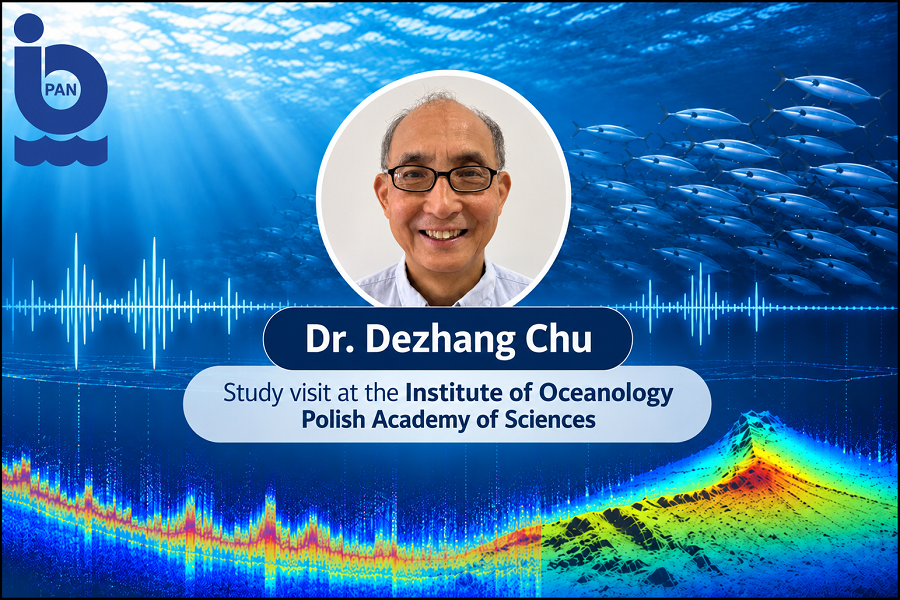
From 14 to 19 September 2026, the Institute of Oceanology of the Polish Academy of Sciences (IO PAN) hosted Dr. Dezhang Chu, a retired scientist formerly affiliated with the NOAA/NMFS Northwest Fisheries Science Center and Woods Hole Oceanographic Institution in the USA, specializing in fisheries acoustics, acoustical oceanography, and underwater acoustics. The scientific host of the visit was Prof. Natalia Gorska, Head of the Laboratory of Marine Acoustics at IO PAN.
The visit provided an opportunity to reflect on and further develop an intensive scientific collaboration that has been ongoing for more than 20 years.
Dr. Chu participated in meetings devoted to the final results of Aleksander Żytko’s doctoral dissertation, which he co-supervises together with Prof. Natalia Gorska.
An important part of the visit was Dr. Chu’s participation in the international conference Acoustics 2026 – 72nd Open Seminar on Acoustics combined with the 39th Symposium on Hydroacoustics in Krynica Morska. He delivered two presentations: the invited lecture “Development and Application of Advanced Science and Technology in Fisheries Acoustics” and the regular presentation “Acoustic Surveys off the West Coasts of the US and Canada Using Uncrewed Surface Vehicles (USV – Saildrones)”. Both contributions were also included in the conference proceedings.
The visit was carried out as an international study visit funded by the Polish Academy of Sciences, within the framework of international cooperation, and represented another step towards strengthening scientific collaboration in the fields of hydroacoustics including fisheries acoustics.
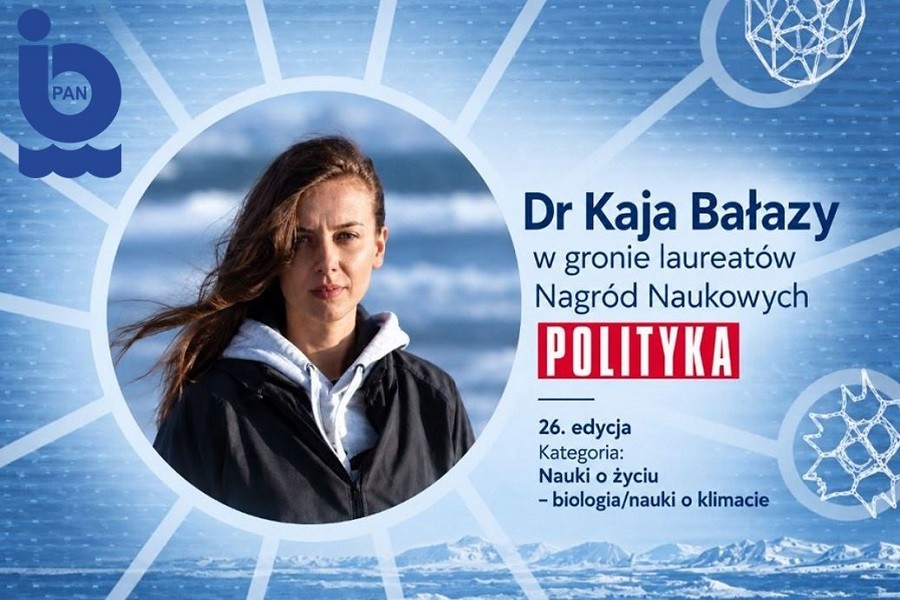
We are pleased to announce that Dr. Kaja Bałazy (Institute of Oceanology of the Polish Academy of Sciences) has been named one of the 15 laureates of the 26th edition of the “POLITYKA” Science Awards. She was recognised in the Life Sciences – Biology/Climate Science category.
Dr. Bałazy’s research focuses on Arctic zooplankton and its role in the functioning of marine ecosystems under ongoing climate change.
Five main prize winners will be selected from among the 15 laureates. The results will be announced on 18 October.
Congratulations on this distinction, and we wish Dr. Bałazy every success in the final stage!
We are pleased to announce the publication of the fourth and final newsletter of the Detect2Protect project, in which the Institute of Oceanology of the Polish Academy of Sciences is a partner. The project focuses on investigating the links between chemical pollution and biodiversity in the Baltic Sea and on developing integrated chemical-biological approaches to marine environmental monitoring.
The project’s key message: to detect the negative effects of chemical pollution at an early stage, marine environmental monitoring should not be limited to measuring chemical concentrations alone. Chemical analyses need to be combined with assessments of biological effects, biodiversity studies, including eDNA, and integrated analyses that enable ecological interpretation of the data.
The latest newsletter includes, among other things, a summary of the project’s key results, a report from the online stakeholder seminar held on 20 May 2026, short interviews with selected stakeholders from the project’s partner countries on the prospects for effective monitoring of chemical pollution in the Baltic Sea region, and a report from the project’s final meeting in Helsinki (Finnish Environment Institute, Syke, 21–22 May 2026), where the results achieved and opportunities for future collaboration were discussed.
We encourage you to read the newsletter and share it with others who may be interested!
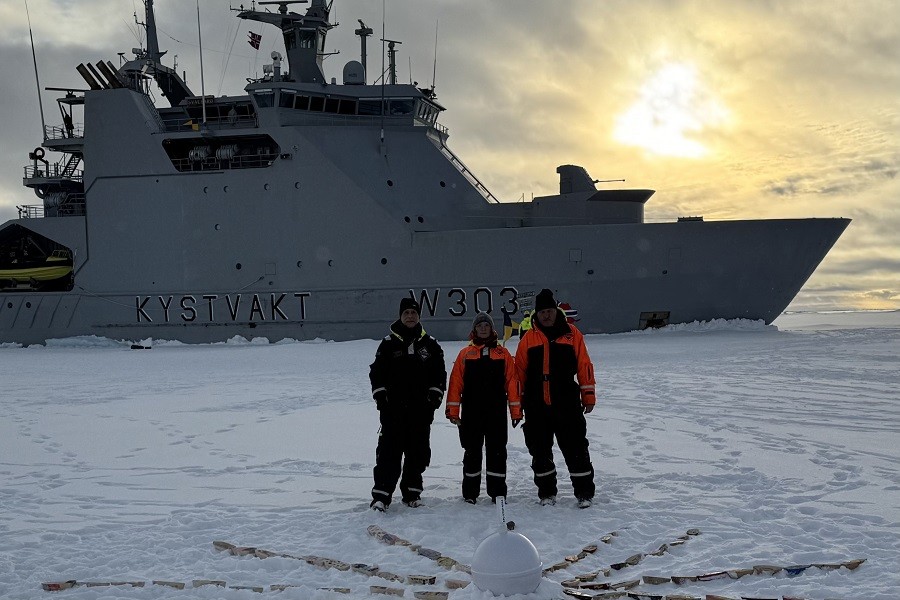
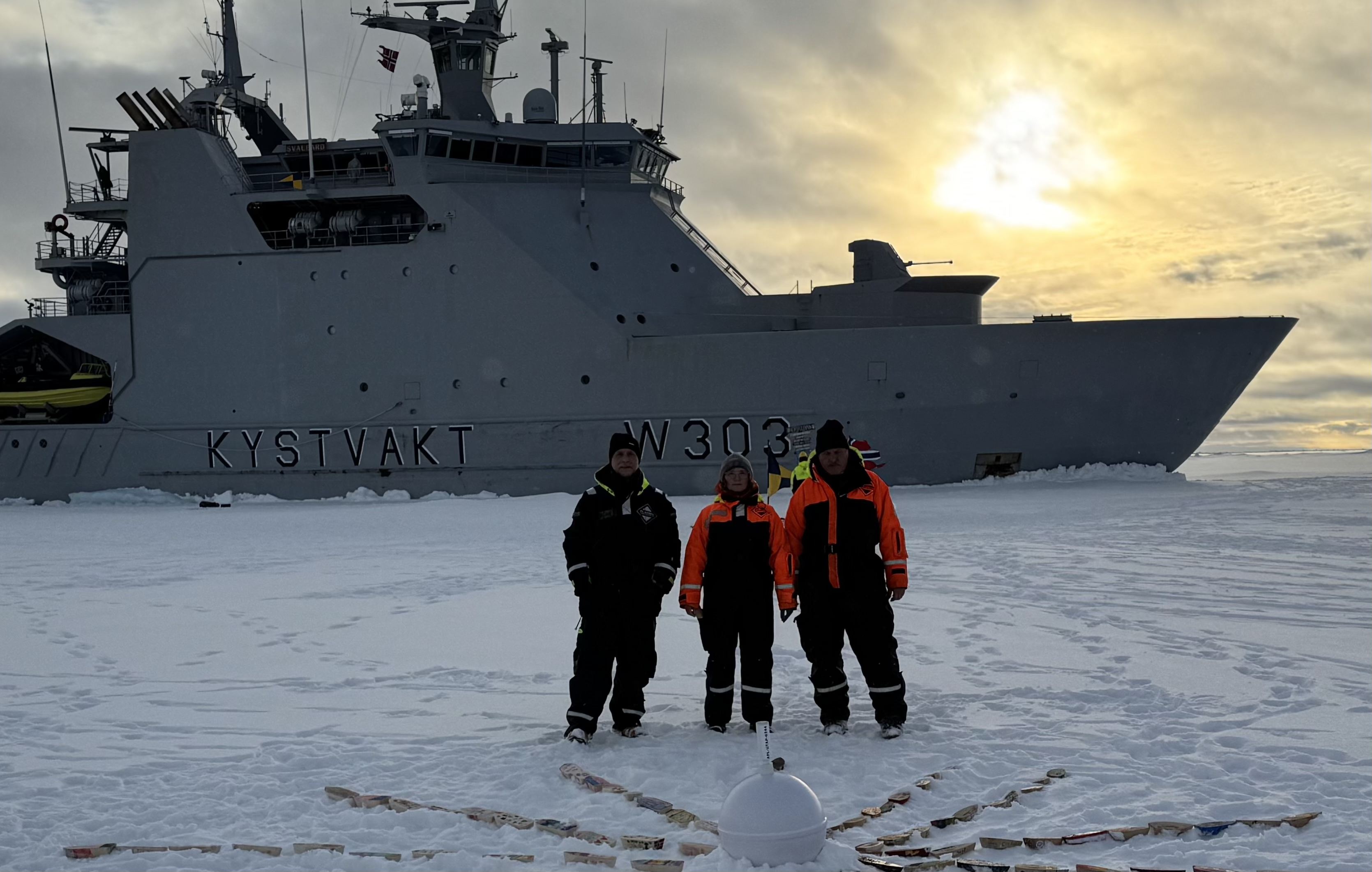
On 29 July 2026, three physical oceanographers from the Institute of Oceanology Polish Academy of Sciences (IO PAN) reached the North Pole. Agnieszka Beszczyńska-Möller, Piotr Wieczorek and Waldemar Walczowski are conducting oceanographic research aboard the Norwegian Coast Guard icebreaker NoCGV Svalbard. The research is being carried out as part of the EU-funded High Arctic Ocean Observation System (HiAOOS) project with contribution from the Argo-Poland program, funded by the Polish Ministry of Science and Higher Education.
The stay at the North Pole lasted 10 hours. During this time, measurements of the ocean properties and structure were carried out from the ship using a CTD profiler, while microstructure measurements in the upper 200 m of the water column were conducted from the edge of the ice floe.
During the research expedition HiAOOS2026 three deep ocean multidisciplinary moorings were recovered. Measurements were also carried out using a CTD profiling system, expendable XCTD probes and microstructure profiler in the upper layer of the Arctic Ocean. Sixty nautical miles from the North Pole, the Argo float operated by the Argo-Polska program was deployed.
As part of the consortium's participation in the Euro-Argo European Research Infrastructure Consortium (Euro-Argo ERIC), the Polish oceanographers also deployed two Argo floats belonging to the German Federal Maritime and Hydrographic Agency (BSH). Further mooring recoveries, including one mooring operated by IO PAN and floats deployments are planned.