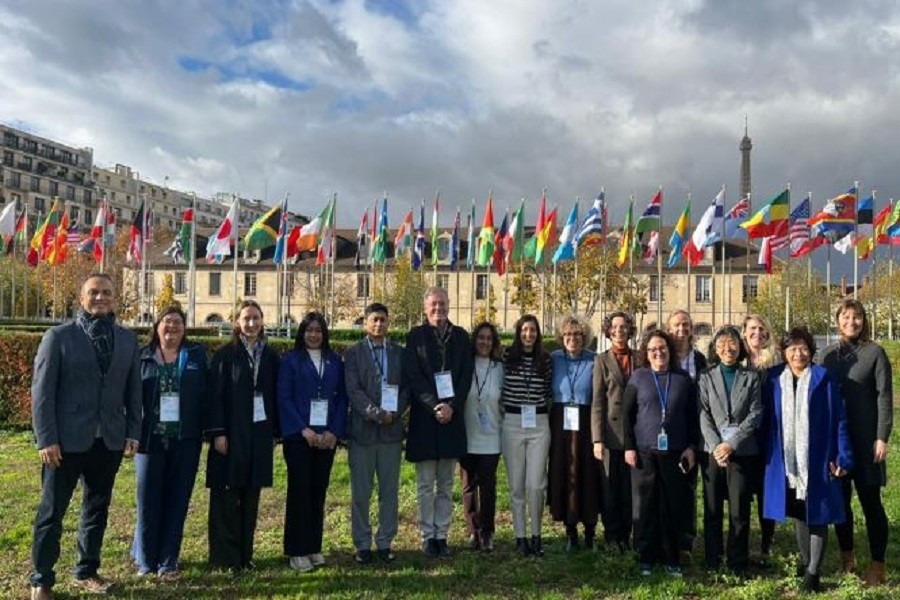
The Intergovernmental Oceanographic Commission (IOC) of UNESCO has convened the first meeting of the renewed Group of Experts on Ocean Literacy (GE-OL) for the 2025–2027 term. Among the 36 experts from 34 countries is Prof. Tymon Zieliński from the Institute of Oceanology of the Polish Academy of Sciences (IO PAN), representing Poland.
The new GE-OL mandate will oversee the implementation of the IOC Ocean Literacy Plan of Action 2026–2030, which sets global priorities for ocean literacy. Key focus areas include integrating ocean knowledge into formal education systems, strengthening the role of ocean literacy in public policies, and supporting initiatives that foster societal engagement in ocean protection.
The participation of an IO PAN representative reinforces Poland’s presence in international efforts to advance ocean literacy and promote awareness of the ocean’s key role for society.
We are pleased to announce that the eCUDO.pl system has been officially recognized as Poland’s National Oceanographic Data Centre (NODC) within the global IODE programme coordinated by the IOC of UNESCO.
The IODE has formally welcomed the Institute of Oceanology of the Polish Academy of Sciences (IO PAN) as the lead institution of the newly designated NODC, expanding the global network to 65 centres, including 11 accredited ones.
The designated contact point for the Polish NODC is Dr Eng. Marcin Wichorowski, Head of Data and IT Infrastructure Management at IO PAN, responsible for developing and operating systems that support the collection, dissemination and archiving of oceanographic data.
We extend our congratulations and appreciation to Dr Eng. Marcin Wichorowski and his team, who — after many years of dedicated effort carried out through projects such as ZSPDO, eCUDO and other initiatives — achieved both international recognition (Intergovernmental Oceanographic Commission of UNESCO) and national approval (Ministry of Infrastructure) for establishing the National Oceanographic Data Centre at IO PAN.
This success has been made possible thanks to the cooperation of many institutions contributing to the development of Poland’s oceanographic data infrastructure, including: MIR-NRI, PGI-NRI, the University of Gdańsk, the Maritime Institute of the Gdynia Maritime University, the Pomeranian Academy in Słupsk, and the University of Szczecin.
This milestone significantly strengthens Poland’s position within the international oceanographic data management system.
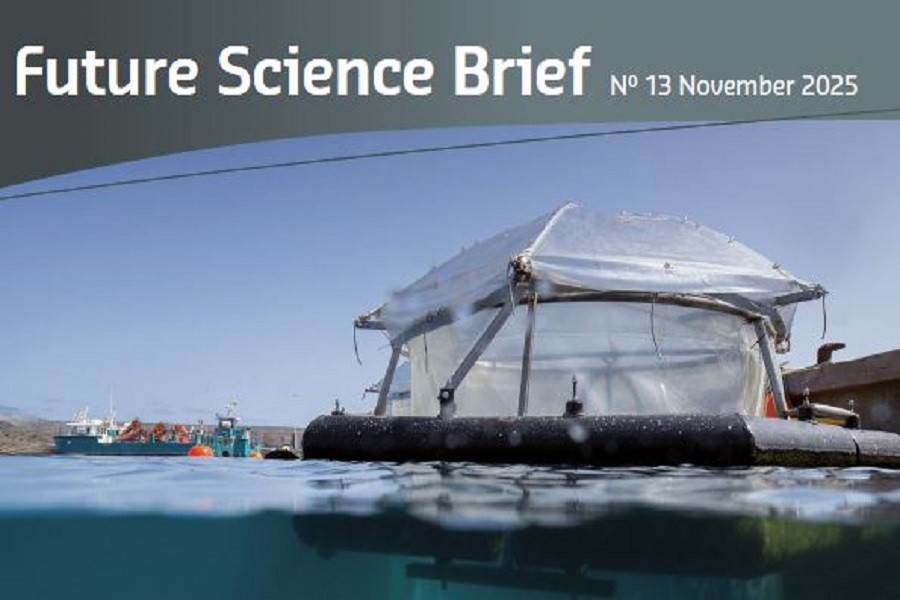
A group of internationally renowned marine scientists, including Karol Kuliński from IO PAN, has published under the European Marine Board the Future Science Brief on ‘Monitoring, Reporting and Verification for marine Carbon Dioxide Removal’. The report is clear: rapid CO2 emissions reduction is the top priority. Carbon Dioxide Removal is not a substitute for emissions reductions; (marine) CDR can only be considered as a potential supplementary measure to support achievement of net-zero emissions. The report clarifies the current scientific, technical and regulatory challenges that must be addressed to develop appropriate and reliable MRV for any future mCDR activities, to safeguard Ocean healthand those who depend on it. According to the State of Carbon Dioxide Removal report, marine CDR methods contribute less than 0.1% to current removal efforts, but this field is growing rapidly. The potential impacts on the marine environment are not yet clear but could be significant.
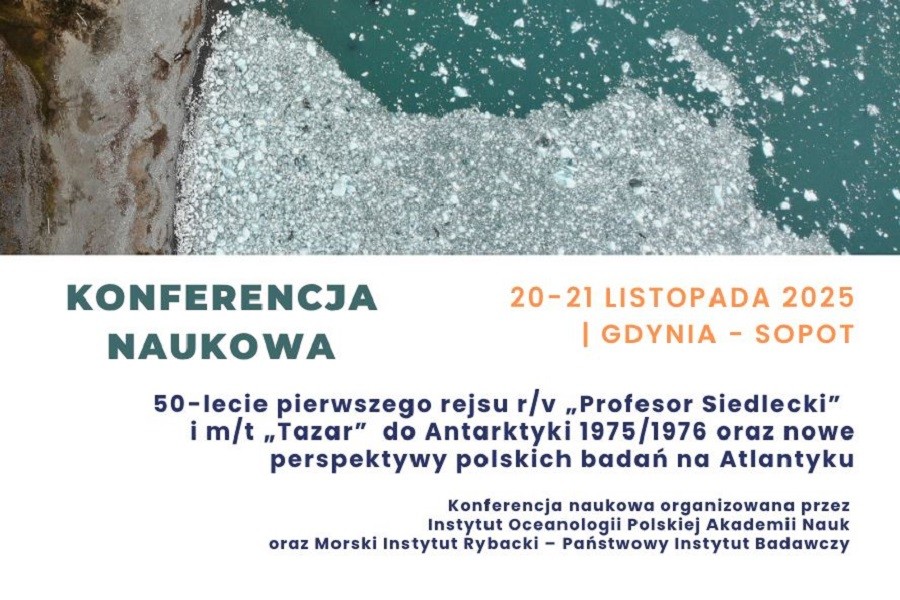
The Institute of Oceanology, Polish Academy of Sciences, together with the National Marine Fisheries Research Institute, invites you to a scientific conference to be held on 20–21 November 2025 in Sopot.
The event, organized by the Institute of Oceanology of the Polish Academy of Sciences in cooperation with the National Marine Fisheries Research Institute, is carried out within the framework of the project "History and Perspectives of Ocean Expeditions: Following Siedlecki's Route (HiPO)". The project is funded by the European Union under the European Funds for Fisheries Programme 2021–2027 (FEDR.04.01-IP.01-005/24).
Project value: PLN 79,169.30
EMFAF contribution: PLN 50,518.51, in accordance with the agreement signed on 2 September 2025
Website: www.rybactwo.gov.pl
Objective: To strengthen the sustainable governance of seas and oceans by promoting ocean literacy, maritime surveillance, and coast guard cooperation.
This conference will feature:
Dates: 20–21 November 2025
Venue: National Marine Fisheries Research Institute (November 20th), Institute of Oceanology, Polish Academy of Sciences, Sopot (November 21st)
Format: on-site event (video recording available afterwards)
Participation: free of charge, registration required
Confirmation deadline: 31 October 2025
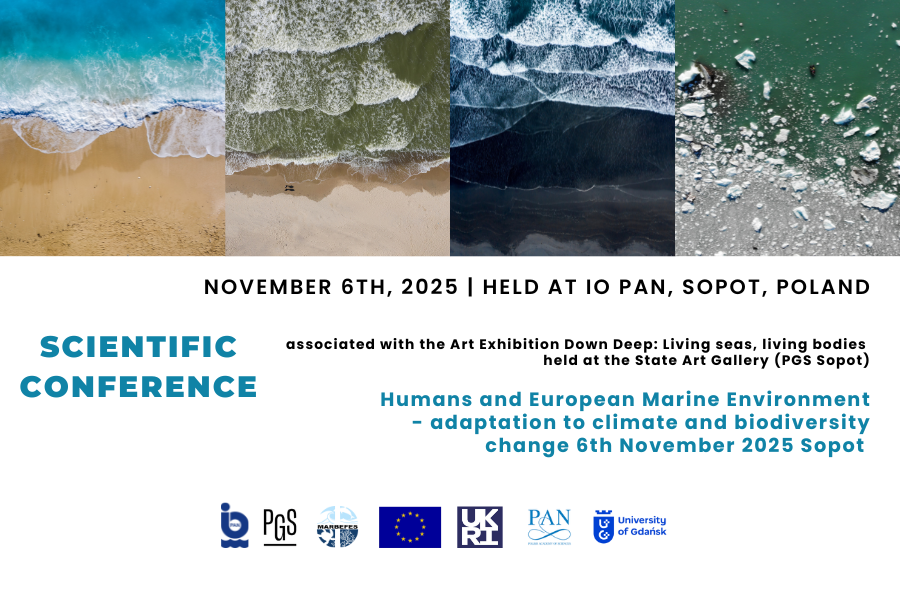
The Institute of Oceanology of the Polish Academy of Sciences (IO PAN) invites you to an interdisciplinary conference accompanying the exhibition In the Depth. Living Seas, Living Bodies (State Art Gallery, Sopot). The event will be devoted to climate change, biodiversity, and human–marine environment relations.
The conference will take place on 6 November 2025 at the IO PAN headquarters, ul. Powstańców Warszawy 55, 81-712 Sopot.
The conference welcomes representatives of the natural sciences, humanities, economics, and the arts. Three main thematic blocks are planned:
Participation in the conference (on-site or online) is free of charge, but prior registration is required (number of places is limited).
Registration - open until 17 October 2025
Agenda
Live stream of the conference
Photo gallery
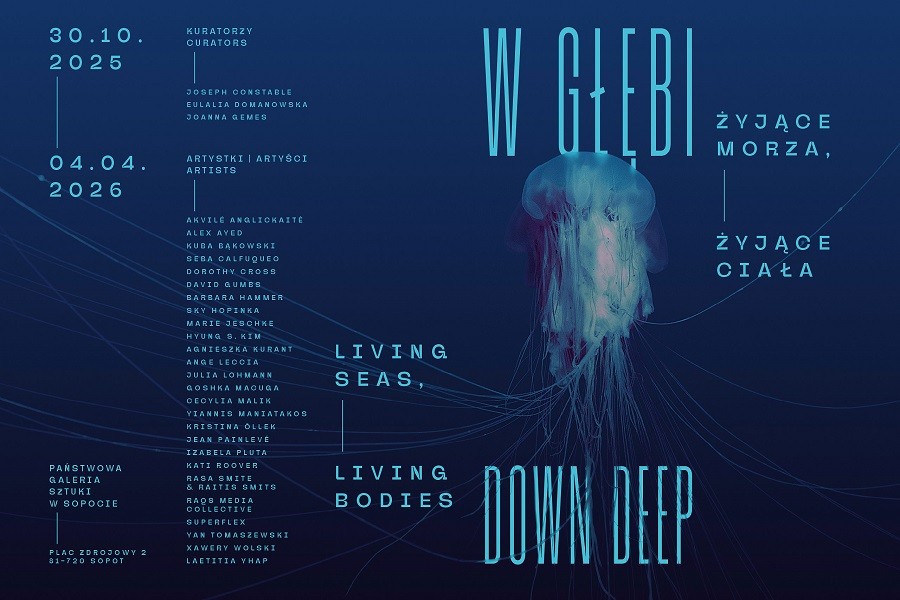
We invite you to a unique exhibition Down Deep: Living Seas, Living Bodies, at the State Gallery of Art in Sopot, organized in cooperation with the Institute of Oceanology of the Polish Academy of Sciences (IO PAN), where curators and artists attempt to offer a new perspective on the relationship between humans and the ocean.
The exhibition combines art and science, drawing on interdisciplinary tools: ocean humanities, ecology, and awareness.
It also features a special section, 'A Women’s Image of the Sea', created on the initiative of IO PAN. This is the outcome of the third edition of an art competition addressed to women artists, who through their sensitivity, visions, and collaboration with women scientists, create narratives about the sea from perspectives often overlooked in dominant discourses.
The works presented in this section employ recycled materials, recovered paints, and water-saving techniques, highlighting the artists’ ecological commitment.
The curator of this section is Dr. Paulina Pakszys from IO PAN, thanks to whom the worlds of science and art meet on common ground.
Opening: 30 October 2025, 6:00 PM
Exhibition dates: 30 October 2025 – 4 April 2026
Venue: State Gallery of Art in Sopot (PGS)